Surprisingly, the Evening Standard keeps coming back and asking for my view on issues libdemmery. This time they obviously wanted to capture some dissent regarding an unusually smooth conference. Sorry, no joy there!
-
This year's LibDem conference has been an extraordinary affair. Where media commentators travelled to Birmingham expecting discontent at poll ratings to spill over into widespread revolt against the leadership they've come out reporting the businesslike nature of a serious and professional agenda-setting event. The party has successfully positioned itself at the front and centre of policy debate tackling the full range of public concerns to give far-sighted and level-headed answers on everything from gender equality to energy issues.
A considerable resolve to resist any panic with a desire to get on with the job at hand has been on show. Throughout all the clamour for more right-wing influence on the coalition the clarity of LibDem purpose is enabling the party to grow up in the spotlight of public scrutiny. And despite all the apparent strength of opposition to the coalition's deficit reduction plan it is a remarkable fact that Nick Clegg's popularity and trust ratings are still higher than Ed Miliband's!
LibDems understandably feel squeezed between the twin forces of political choice and political reality, but in this the party experience perfectly reflects everything the country has gone through since the financial bubble burst. So any discomfort felt by activists and representatives alike offers a prime perspective to help find way to help dig the country out of the current predicament. Don't discount this peculiarly British underdog just yet!
-
more letters

Showing posts with label letters. Show all posts
Showing posts with label letters. Show all posts
Wednesday, 21 September 2011

Friday, 26 August 2011
'Broken Britain' is a broken analysis
This is my requested response to the Evening Standard following Tim Montgomery's attack on LibDem influence on coalition social policy.

ConHome's Tim Montgomery is correct to worried about the waning influence of explicitly right-wing ideas within areas of the coalition government - but for the rest of the country and the LibDems this should be cause for celebration!
The delusion which seems to prevail among true-blue ranks that populist headline-grabbing initiatives are sufficient to resolve wide-ranging and deep-seated problems in society and the national economy if they appease enough anxious middle-class supporters in their heartlands of Tunbridge Wells or deepest Wiltshire by assigning ownership to friendly-faced party patriarchs is foundering on the rocks of Whitehall bureaucracy and on the streets of inner cities alike. Rather than complaining that due diligence into the viability of pet political projects is highlighting their specific weaknesses he would be far better advised to embrace coalition dialogue with a more cooperative mindset and understand how his doctrinal approach must be tempered to more practical effect by the reality of demands for consensual decisions with greater input from experts in the field and their partners in government.
Whilst Cameron's growing authority over Parliament continues to fail to transfer into opinion poll ratings tory loyalists are beginning to sense that coalition is damaging their chances of an overall majority at the next general election and an internal showdown at their upcoming annual conference may be beckoning.
-
For another perspective here's Tom Papworth
-
more letters
ConHome's Tim Montgomery is correct to worried about the waning influence of explicitly right-wing ideas within areas of the coalition government - but for the rest of the country and the LibDems this should be cause for celebration!
The delusion which seems to prevail among true-blue ranks that populist headline-grabbing initiatives are sufficient to resolve wide-ranging and deep-seated problems in society and the national economy if they appease enough anxious middle-class supporters in their heartlands of Tunbridge Wells or deepest Wiltshire by assigning ownership to friendly-faced party patriarchs is foundering on the rocks of Whitehall bureaucracy and on the streets of inner cities alike. Rather than complaining that due diligence into the viability of pet political projects is highlighting their specific weaknesses he would be far better advised to embrace coalition dialogue with a more cooperative mindset and understand how his doctrinal approach must be tempered to more practical effect by the reality of demands for consensual decisions with greater input from experts in the field and their partners in government.
Whilst Cameron's growing authority over Parliament continues to fail to transfer into opinion poll ratings tory loyalists are beginning to sense that coalition is damaging their chances of an overall majority at the next general election and an internal showdown at their upcoming annual conference may be beckoning.
-
For another perspective here's Tom Papworth
-
more letters
Monday, 14 March 2011
Of potential banana skins and splits
This is my requested response to the Evening Standard about Nick Clegg's speech to the LibDem Spring Conference in which he vowed to protect his party's 'soul' despite being forced to make compromises as part of the deal to be in coalition.

Protests are, he said, "the price of power" (and any classical scholars among you may like to consider the Milian Dialogue on exactly this point) - suggesting that if you want to any some influence on the world then you'd better learn sooner than later that 'you can't please all of the the people all of the time'.
It's a cliche, but it is because it's about as close to the truth as it's possible to get.
You can watch a clip of him speaking here.
And here is a full transcript of his speech.
100-150 words is a good rule of thumb for providing a comment, but I enjoy playing with formats to mess with people's minds, so I wrote double and split it into two parts to make a wider point.
-
I think it works best as one combined, but you can feel free to choose either depending on how they complement other viewpoints. Your choice will be an indicator of which side of the debate you're on.
1) Every LibDem leader is habitually criticised for a percieved inability to stage-manage the appearance of unity, but it is this openness about any real differences which keeps the LibDems such a vibrant force in British politics. It is a refreshing change from the old left-right axis and is the well-spring of constant revitalisation, though at times it can feel like a queasy rollercoaster ride.
The 'soul' of the LibDem party and what distinguishes it from other parties is that it is driven by the membership rather than the leadership, so Nick Clegg's ability to demonstrate that he enagages in active debate and actually reflects the majority view is more important than his immediate poll ratings in one the top jobs. His performance in Sheffield showed he is a master at tempering idealism without becoming overly-pragmatic, but good politics doesn't always make for good headlines.
2) Contrary to claims that vocal dissent over specific priorities indicates a split in support, this is in fact nothing more than par for the course. Nick Clegg knows LibDem politics isn't about him, he knows it's about doing politics in a way which produces effective and positive policy, but he also knows his opponents are trying to personalise things in order to distract from the underlying issues.
Where determined resolution to enact principles shapes events reactionary opinion always lags idly behind, so despite any current concerns about his popularity levels Clegg can stand tall as the most successful LibDem leader of the modern era and he can be sure this will stand his party in good stead. And as the economy starts to pick up again you can be confident that he will have earnt his electoral bonus - though whether that can come soon enough for this May is another matter.
-
I think the basic point I'm trying to get across is the need for balance in any debate.
The scenes of angry protesters directed at the LibDem leader is a big change from days when Charlie Kennedy lead protests over the misconceived invasion of Iraq, but it's not a new experience for a party with a strong grassroots activist membership who won their spurs mixing it for decades against the 'hang em and flog em' brigade, racists, militant pro-lifers and a whole host of blinkered utopian opportunists and absolute cynics for whom being human isn't good enough for a potential government-in-waiting.
The hard lesson that there is rarely any quick fix to perceived or real problems and those that there are aren't easily transferred to subsequent generations who are rightly impatient for improvement.
However impatience can also easily spill over to cause the hasty presumption which leads to unfair and damaging favoritism and is prime amongst the evils to the liberal tradition.
So having made the decision to join the coalition, Clegg and his party are forced to tough it out and prove themselves all over again, or provide a perfect demonstration of flakiness to give their critics all the evidence they need.
So it may not be just about whether LibDem MPs can keep hold of their soul, but whether they have the stomach to stick it out and also the good sense to chart a sustainable strategy in this delicate and volatile situation when events beyond control could have seismic consequences - literally.
With the Nikkei predicted to fall by up to 20% as insurance losses from the massive 8.9 quake and Tsunami are expected to top $35bn, European markets have shuddered just when the return of market confidence was beginning to be felt in the real economy.
Add to this the possibility of the explosive Libyan situation and there are clear and immediate triggers for impending global disaster - on a timescale which even the most doom-laden climate fearmonger would avoid like the plague.
Watch out for those banana skins.

Protests are, he said, "the price of power" (and any classical scholars among you may like to consider the Milian Dialogue on exactly this point) - suggesting that if you want to any some influence on the world then you'd better learn sooner than later that 'you can't please all of the the people all of the time'.
It's a cliche, but it is because it's about as close to the truth as it's possible to get.
You can watch a clip of him speaking here.
And here is a full transcript of his speech.
100-150 words is a good rule of thumb for providing a comment, but I enjoy playing with formats to mess with people's minds, so I wrote double and split it into two parts to make a wider point.
-
I think it works best as one combined, but you can feel free to choose either depending on how they complement other viewpoints. Your choice will be an indicator of which side of the debate you're on.
1) Every LibDem leader is habitually criticised for a percieved inability to stage-manage the appearance of unity, but it is this openness about any real differences which keeps the LibDems such a vibrant force in British politics. It is a refreshing change from the old left-right axis and is the well-spring of constant revitalisation, though at times it can feel like a queasy rollercoaster ride.
The 'soul' of the LibDem party and what distinguishes it from other parties is that it is driven by the membership rather than the leadership, so Nick Clegg's ability to demonstrate that he enagages in active debate and actually reflects the majority view is more important than his immediate poll ratings in one the top jobs. His performance in Sheffield showed he is a master at tempering idealism without becoming overly-pragmatic, but good politics doesn't always make for good headlines.
2) Contrary to claims that vocal dissent over specific priorities indicates a split in support, this is in fact nothing more than par for the course. Nick Clegg knows LibDem politics isn't about him, he knows it's about doing politics in a way which produces effective and positive policy, but he also knows his opponents are trying to personalise things in order to distract from the underlying issues.
Where determined resolution to enact principles shapes events reactionary opinion always lags idly behind, so despite any current concerns about his popularity levels Clegg can stand tall as the most successful LibDem leader of the modern era and he can be sure this will stand his party in good stead. And as the economy starts to pick up again you can be confident that he will have earnt his electoral bonus - though whether that can come soon enough for this May is another matter.
-
I think the basic point I'm trying to get across is the need for balance in any debate.
The scenes of angry protesters directed at the LibDem leader is a big change from days when Charlie Kennedy lead protests over the misconceived invasion of Iraq, but it's not a new experience for a party with a strong grassroots activist membership who won their spurs mixing it for decades against the 'hang em and flog em' brigade, racists, militant pro-lifers and a whole host of blinkered utopian opportunists and absolute cynics for whom being human isn't good enough for a potential government-in-waiting.
The hard lesson that there is rarely any quick fix to perceived or real problems and those that there are aren't easily transferred to subsequent generations who are rightly impatient for improvement.
However impatience can also easily spill over to cause the hasty presumption which leads to unfair and damaging favoritism and is prime amongst the evils to the liberal tradition.
So having made the decision to join the coalition, Clegg and his party are forced to tough it out and prove themselves all over again, or provide a perfect demonstration of flakiness to give their critics all the evidence they need.
So it may not be just about whether LibDem MPs can keep hold of their soul, but whether they have the stomach to stick it out and also the good sense to chart a sustainable strategy in this delicate and volatile situation when events beyond control could have seismic consequences - literally.
With the Nikkei predicted to fall by up to 20% as insurance losses from the massive 8.9 quake and Tsunami are expected to top $35bn, European markets have shuddered just when the return of market confidence was beginning to be felt in the real economy.
Add to this the possibility of the explosive Libyan situation and there are clear and immediate triggers for impending global disaster - on a timescale which even the most doom-laden climate fearmonger would avoid like the plague.
Watch out for those banana skins.
Thursday, 23 December 2010
Cable Conducts Storm
this is my requested response on the subject to the Evening Standard
-
Vince Cable is clearly still the lightning rod capable of conducting the flow of political events!
The Business Sec's remarks can be considered to have damaged his internal standing within the coalition and reduced his influence, but by stating the obvious he has regained some sympathy at large within the country for his party too - which will certainly help in the forthcoming Oldham by-election where a strong LibDem showing is vital to maintaining membership confidence in party leaders.
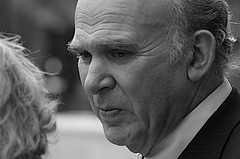 Image by Steve Punter via FlickrDr Cable has demonstrated in essence that LibDems are engaging in heavy-weight policy discussions behind the scenes with all the voluable disagreements one should expect in any serious grown-up discussion. This will reassure many that policies are being decided on their merits, despite ongoing anxiety about the speed of announcements. The fact that the differences between the parties have been kept under wraps until now is a testament to the determination of both sides to make the coalition work in the national interest.
LibDem ministers have made their point that they aren't attached to power for its own sake, but they can no longer bluff their way through vital upcoming discussions - and this will also satisfy right-wingers that their own concerns are not being completely overlooked.
In particular Vince Cable's public exhortation against Rupert Murdoch is evidence of ruthless calculation, not a gaffe.
It is common knowledge LibDems are worried about the imbalance in media power represented by NewsCorp, but the tide has been against preventing a takeover of the BSkyB (it is already effectively under Murdoch's control with a 39% holding, and has long been treated as such by government departments) since the precedent set by the last government with its decision on ITV. So the handover of the decision-making power to the prominent Murdoch cheerleader and tory Culture Sec Jeremy Hunt MP can be considered a concession with an obvious outcome.
However the manner in which this give and take was made was a matter of delicate manoeuvering and Cable's only real option was to disqualify himself from the task by whatever means he had at his disposal so as to avoid the political booby-trap of further angering his own supporter base. With Tuition Fees it was the lesser of two evils, but BSkyB was Hobson's Choice.
The trade-off between Cable's personal and public standing somewhat neutralises his 'nuclear option' by setting out some much needed boundaries (such as on certain totemic welfare measures) which bolsters the Cameron-Clegg partnership by giving each side a bit of what they want. As a result the separate identities in the interdependent coalition relationship are more clearly defined.
And LibDems certainly aren't displeased to see Ed Miliband make a complete reversal of his strategy overnight - one day LibDems were shielding ideological tories, the next their attacks on the hardliners are impotent. That's the man who leads the official opposition and hopes to replace the coalition, and he can't even hold a consistent line with himself!
-
Vince Cable is clearly still the lightning rod capable of conducting the flow of political events!
The Business Sec's remarks can be considered to have damaged his internal standing within the coalition and reduced his influence, but by stating the obvious he has regained some sympathy at large within the country for his party too - which will certainly help in the forthcoming Oldham by-election where a strong LibDem showing is vital to maintaining membership confidence in party leaders.
Image by Steve Punter via FlickrDr Cable has demonstrated in essence that LibDems are engaging in heavy-weight policy discussions behind the scenes with all the voluable disagreements one should expect in any serious grown-up discussion. This will reassure many that policies are being decided on their merits, despite ongoing anxiety about the speed of announcements. The fact that the differences between the parties have been kept under wraps until now is a testament to the determination of both sides to make the coalition work in the national interest.LibDem ministers have made their point that they aren't attached to power for its own sake, but they can no longer bluff their way through vital upcoming discussions - and this will also satisfy right-wingers that their own concerns are not being completely overlooked.
In particular Vince Cable's public exhortation against Rupert Murdoch is evidence of ruthless calculation, not a gaffe.
It is common knowledge LibDems are worried about the imbalance in media power represented by NewsCorp, but the tide has been against preventing a takeover of the BSkyB (it is already effectively under Murdoch's control with a 39% holding, and has long been treated as such by government departments) since the precedent set by the last government with its decision on ITV. So the handover of the decision-making power to the prominent Murdoch cheerleader and tory Culture Sec Jeremy Hunt MP can be considered a concession with an obvious outcome.
However the manner in which this give and take was made was a matter of delicate manoeuvering and Cable's only real option was to disqualify himself from the task by whatever means he had at his disposal so as to avoid the political booby-trap of further angering his own supporter base. With Tuition Fees it was the lesser of two evils, but BSkyB was Hobson's Choice.
The trade-off between Cable's personal and public standing somewhat neutralises his 'nuclear option' by setting out some much needed boundaries (such as on certain totemic welfare measures) which bolsters the Cameron-Clegg partnership by giving each side a bit of what they want. As a result the separate identities in the interdependent coalition relationship are more clearly defined.
And LibDems certainly aren't displeased to see Ed Miliband make a complete reversal of his strategy overnight - one day LibDems were shielding ideological tories, the next their attacks on the hardliners are impotent. That's the man who leads the official opposition and hopes to replace the coalition, and he can't even hold a consistent line with himself!
Friday, 23 July 2010
More rumblings on expenses
Did I say I got a letter in the Evening Standard under my avatar?
Well it was about the David Laws resignation over his expenses. Here's what was published:
All well and good, but it seems from Channel 4's investigation into the potential abuses of the election expenses system that there are many more questions still to be answered.
And looking at Zac Goldsmith's performance when he was unapologetic in defence of his practice of creative accounting it would seem there is much for the coalition to get to grips with.
As I said elsewhere,
Frankly, from where I sit, for potential legislators to debase themselves in any manner of ways just to comply with something of popular outcry which their electors hope for them to sort out is a ludicrous reflection of their ability to do what we hope of them - they should not be defending their actions, but articulating how their actions reflect a more proper way of doing business and insodoing prosecute the case for reform.
Zac Goldsmith's indefensible stance in support of abusing the status quo over instituting proper reform undermines his party's mandate for government.
-
NB. It should be noted the Electoral Commission is investigating.
Michael Crick has a couple of questions to ask.
Well it was about the David Laws resignation over his expenses. Here's what was published:
"David Laws' resignation highlights a persisent gap between the aims of government regulation and the regulations as written. What he admitted to was in line with the spirit of the rules, albeit not in complete accordance with the actual rules themselves. Compare this with the dozens of MPs and ministers who escaped censure by arguing they were sticking within the letter of the law, even while flagrantly abusing the generosity of the taxpayer.
The bigger scandal is that the rules don't function as they should. They neither prevent confusion or deter the real criminals, nor do they ensure any trangressions are made good. Catcalls of moral indignation seemingly follow every revelation (petty or otherwise) about our elected representatives or other public figures, yet the true hypocrisy rests unmolested between the system of rules and a public mood which makes few allowances for preconcieved notions of propriety and regularly fails to account for the circumstances of the individuals concerned or the situation society faces.
Now that Laws has paid his price for an attempt at honorable discretion, I hope Cameron and Clegg will see sense and use this episode to move forward with an agreed position for proper reform of the expenses system which makes it about more than a hollow bureaucratic exercise in demonstrating an individual’s commitment to serving the public and actually starts enabling them to do the job they are supposed to do. The result will ironically prove whether the civil service is more interested in serving the public or supporting its own vested interest."
All well and good, but it seems from Channel 4's investigation into the potential abuses of the election expenses system that there are many more questions still to be answered.
And looking at Zac Goldsmith's performance when he was unapologetic in defence of his practice of creative accounting it would seem there is much for the coalition to get to grips with.
As I said elsewhere,
"I feel sorry for poor little Zac, creating such adamant, determined and vociferous enemies so early in his nascent political career is not an indication of a man with upstanding moral or intellectual resolution. Clearly it wasn’t these abilities which enabled him to reach his current position, so he will have to depend on those which did [in order] to stay there – that could turn out to be very expensive!"Now, parliamentary expenses (the allowances reimbursed for what they do when they get there) are different from electoral expenses (the limit allowed to be spent getting there in the first place), but the excuses given that they are 'within the rules' are the same. It seems not to matter what the spirit of the rules are, just that you are capable of the contortions required to jump through the flaming hoops of compliance.
Frankly, from where I sit, for potential legislators to debase themselves in any manner of ways just to comply with something of popular outcry which their electors hope for them to sort out is a ludicrous reflection of their ability to do what we hope of them - they should not be defending their actions, but articulating how their actions reflect a more proper way of doing business and insodoing prosecute the case for reform.
Zac Goldsmith's indefensible stance in support of abusing the status quo over instituting proper reform undermines his party's mandate for government.
-
NB. It should be noted the Electoral Commission is investigating.
Michael Crick has a couple of questions to ask.
Subscribe to:
Posts (Atom)


